
#3 Dylan Harper

6'5 | Guard | Rutgers | 03/02/2006
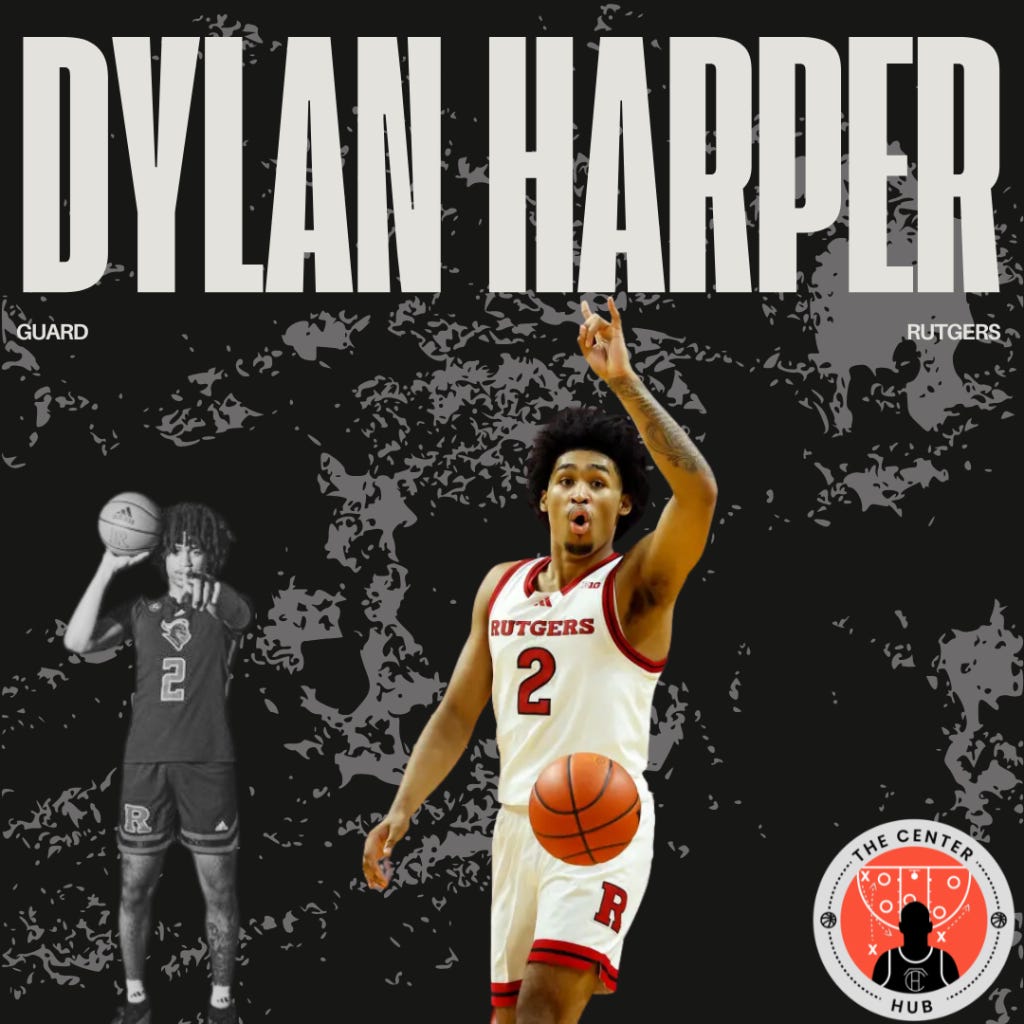

Cerebro Player Profile: Dylan Harper
Big Board Rankings 1.0 (@ twitter):

Evaluation by: @CP3_777
In an era of basketball where 3-level scoring and versatile playmaking reign supreme, Dylan Harper represents the prototypical lead guard that teams covet. At 6'4" and 220 lbs, Harper has the requisite size and strength not only to hold his own in the NBA but also to make an impact against NBA-level defenses. Considered one of the craftiest and most high-IQ players in this draft class, Harper’s qualities are most evident when facilitating offense in the half-court. At 19 years old, Harper already exhibits advanced handle, vision, cadence, and footwork. Taken together, these skills allow Harper to consistently create high-percentage shots for both himself and his teammates by finding passing angles in tight spaces, whether stationary or in motion. His mastery of the point guard fundamentals ensures that his offensive success isn’t solely dependent on his athletic rim attacks or 3-point shooting.
Defensively, Dylan Harper reads an opponent’s offensive sets with a point guard’s mindset. What makes his defensive tenacity so unique is his proactive approach—he’s more quick-thinking than reactive. Harper anticipates passing lanes, often beating his man to key spots, forcing them to terminate their dribble or take errant, contested shots. He frequently takes on the most difficult defensive assignments due to his size and stout frame. Harper brings physicality on the wing and is equally adept at absorbing contact in the paint. While he is projected to be better-suited as a switchable help defender, his lateral quickness and fast hands should make scouts and coaches confident in his ability to defend at the point of attack, especially in half-court sets.
Though he’s best known as the son of 5-time NBA Champion Ron Harper, Dylan not only carries NBA pedigree and legacy, but he also represents the next evolutionary step in guard/wing multipositionality. Harper’s ability to process the game faster than his peers allows him to be the catalyst of his team’s offense, while also serving as a reset or release option on any given play. The offense never becomes stagnant when Harper is on the court. As the primary ball handler, Harper does more than facilitate or manage the team’s offense. He consistently shifts the defense, providing his teammates with multiple scoring opportunities on each possession. What’s even more impressive is that Harper can achieve this offensive versatility even when playing off-ball. His willingness and proficiency as a cutter, off-ball screener, and connective passer ensure that defenses can’t focus solely on the passing lanes.
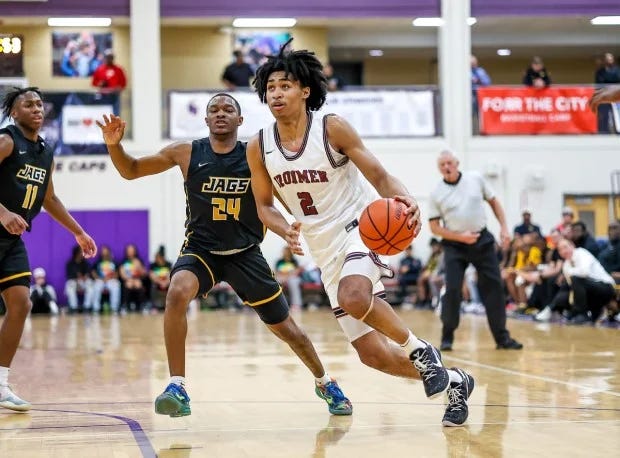
While he may not have ‘elite’ athleticism, Harper’s NBA-level size (6'4" with a 6'10" wingspan) and strength allow him to play both guard positions and even log quality minutes at small forward. Despite this current era of ‘pace and space’ basketball, the NBA has seen jumbo point guards who control pace (Luka, SGA, Anthony Edwards) and achieve immediate success in the league. Like these established stars, Harper never seems rushed by defensive schemes. Instead, he plays at his own pace, lulling defenders to overreact to his subtle feints, fakes, or jab steps. Dylan Harper could very well be the most intuitive and methodical player in this draft class.